Building Proper Ballet Technique: Why Strong Foundations Matter for Every Dancer
The image of a ballerina effortlessly gliding across the stage on the tips of her toes is often the spark that ignites a lifelong passion for dance. It is the defining moment many young students in Greenock and beyond aspire toward. However, that image of grace is supported by something far less visible but infinitely more critical: years of rigorous, structured technical training.
At Elite Academy of Dance, we understand that the journey to becoming a proficient dancer is not a sprint. It is a carefully constructed marathon. We prioritise the safety, health, and long-term development of our students above quick fixes or rushing into advanced movements. Here is why proper ballet technique must be the cornerstone of every dancer’s education.
The Reality Behind Being “Pointe Perfect”
It is every young dancer’s dream to be “Pointe Perfect.” We frequently hear the question from enthusiastic parents and eager students: “At what age can I go on pointe?”
The honest answer is that there is no single right or wrong age.
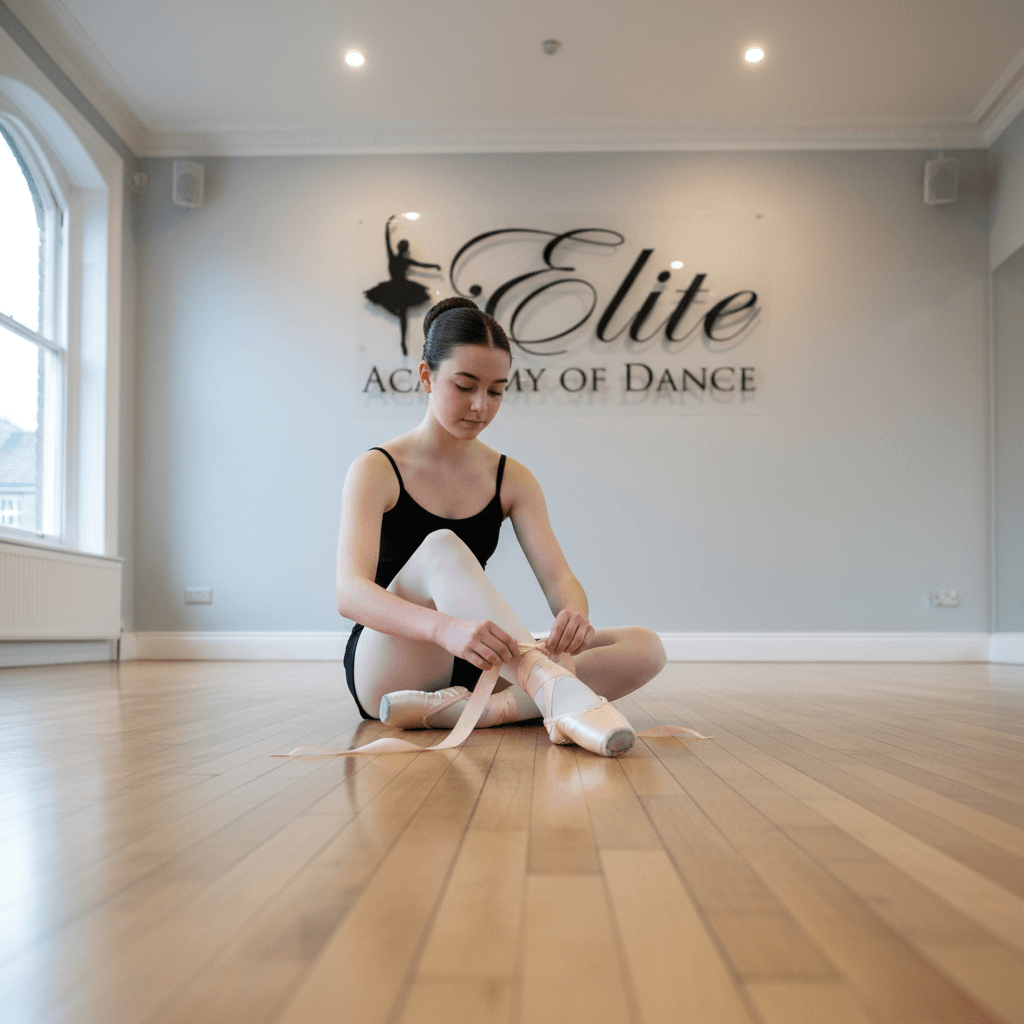
Pointe work is the culmination of years of preparation. It requires exceptional core stability, ankle strength, and precise alignment. Attempting this advanced stage without the necessary physical foundation can cause serious injury and long-term damage to a developing body. Our priority is always the welfare of the dancer.
When you observe our younger students in the studio performing repetitive pointing and stretching exercises, it might look simple. In reality, they are engaging in vital conditioning. They are slowly building the strength that will eventually enable them to support their entire body weight on their toes safely. We do not rush this process. We respect the unique anatomical development of every child. Some students may be ready at thirteen, whilst others may need more time. We ensure that when that moment comes, they are physically and technically prepared to succeed without risk.
The Royal Academy of Dance Standard
We take immense pride in being the only specialist Royal Academy of Dance (RAD) school in Inverclyde. This affiliation is not merely a label; it is a guarantee of quality and safety. The RAD has set the global standard in classical ballet since 1920, and we adhere strictly to their internationally recognised syllabus.
Our commitment to these standards means that we do not treat ballet as an “add-on” class. It is our sole focus. From our Pre-School classes that introduce the fundamentals of movement to our advanced vocational training, every step is calculated to build upon the last.
Furthermore, instruction matters. Before qualifying to teach Classical Ballet, our teachers—led by Julie Kavanagh—have undergone extensive training themselves. This involves a two-year teaching qualification in addition to their own formal dance training. Learning does not stop there. We engage in mandatory Continuing Professional Development (CPD) to ensure our knowledge of anatomy, safe practice, and pedagogy remains current. When students train with us, they are receiving the most up-to-date ballet education available in Scotland.
A Structured Path to Achievement
One of the primary benefits of the RAD syllabus is its clear progression. We guide students through a logical framework that fosters discipline and artistic development.
The Graded Syllabus Starting from Pre-Primary and Primary in Dance, moving through Grades 1 to 8, this pathway provides a broad practical education. It develops technical capabilities, musicality, and performance skills. This is where the foundational “building blocks” are laid.
Vocational Graded Examinations For those with the ambition and aptitude to pursue dance more seriously, we offer the Vocational syllabus (Intermediate Foundation through to Advanced 2). These levels provide an in-depth study of ballet and prepare students for a potential career in the performing arts.
There is also a tangible academic benefit to this rigorous structure. Exams from Grade 6 and above attract UCAS points, carrying the same weight as National 5 and Higher exams. This means that the hours spent at the barre in our Watt Street studio contribute directly to university applications and future academic prospects.
Patience and Individual Growth
In a world that often values instant gratification, classical ballet teaches the value of patience. No two bodies are the same. Factors such as bone structure and natural muscle development play a significant role in how a dancer progresses.
It can be difficult for a student to see a peer move up a level or receive their pointe shoes first. However, we constantly reinforce the message that individual progress is what matters. Pushing a body that is not ready leads to poor technique, which is incredibly difficult to correct later in life.
By focusing on proper technique from the very first lesson, we ensure that our students—whether they are three years old or joining us as teenagers—develop correctly. We have seen top dancers who only began their training at 13 or 14 achieve remarkable things because they applied themselves to the correct technical principles.
Joining Our Community
Whether the goal is professional performance or simply the joy of movement and improved posture, the foundation remains the same. We welcome everyone to our private studio at 15a Watt Street, Greenock to experience the difference that professional, structured training makes.
For those interested in learning more about our timetables, our history of performances, or how to enrol, you can visit Elite Academy of Dance for full details.
We invite you to pop in any week day evening to see our work in action. Alternatively, please contact Julie directly on 0775 324 6035 to discuss how we can help you or your child build the strong foundations required for a lifetime of dance.